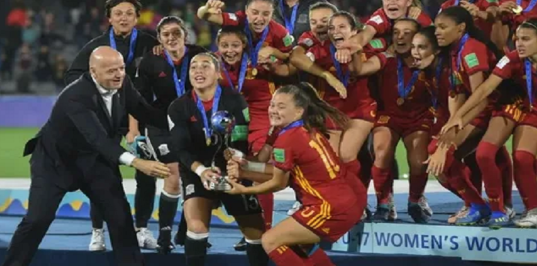
 FIFA U‑17 Women’s World Cup is an international tournament for women’s football teams under 17 years old, organized by the International Football Federation (FIFA).
It’s an important platform for young players to develop their skills, gain international experience, and open up opportunities to become professional players. Besides improving their skills, the tournament also plays a crucial role in promoting women’s football globally and discovering potential talents for national teams n88.
Tournament structure and group stage format
Before delving into the details of the tournament format, it’s essential to understand the overall structure of the FIFA U-17 Women’s World Cup. A clear understanding of this structure will help fans and teams easily follow and analyze the tournament live casino n88.
Number of teams and group stage
The U-17 Women’s World Cup typically brings together 16 teams from six continental confederations. The group stage is the starting point to determine the strongest teams that advance to the knockout rounds:
- The 16 teams are divided into 4 groups, with 4 teams in each group.
- The competing teams FIFA U‑17 Women’s World Cup inCircle your turn in the game to earn points: 3 points for a win, 1 point for a draw, and 0 points for a loss.
- The top two teams from each group will advance to the quarter-finals.
The group stage gives teams the opportunity to test tactics and develop their playing skills. At the same time, it ensures fair competition among the participating teams.
FIFA U-17 Women’s World Cup Ranking Criteria
After the group stage, the teams’ rankings and which teams advance are determined based on clear criteria. These criteria help ensure transparency and fairness in determining which teams qualify for the knockout round.
- Total points earned in the group stage.
- Goal difference if teams are tied on points.
- Number of goals scored.
- The results of the head-to-head matches between the teams involved.
- If the winner is still undecided, the organizers may use a draw.
These criteria ensure fairness and transparency in ranking the teams. At the same time, they maintain a high level of competitiveness for the tournament right from the group stage.
FIFA U-17 Women’s World Cup Knockout Round
After the teams advance from the group stage, the tournament enters the knockout round, where the championship is decided and young players gain real international competition experience.
FIFA U-17 Women’s World Cup Knockout Round
The knockout stage is a crucial phase that determines which team gets closer to the championship:
Quarterfinals: The 8 winning teams from the group stage will compete in a knockout format, with the winners advancing to the semifinals.
- Semifinals: The four quarterfinal winners compete, the two winners advance to the final, and the two losers compete for third place.
- Final: The two winning teams from the semi-finals compete to determine the champion.
- If the match is tied after 90 minutes of regulation time, it goes into extra time (2 x 15-minute periods), and if it is still tied, the winner will be decided by a penalty shootout.
The knockout rounds hone the tactical skills and competitive spirit of young players. At the same time, they help them develop the ability to handle pressure in crucial matches.
Applications and importance of the tournament
The U-17 Women’s World Cup not only holds professional value but also plays a crucial role in the development of youth football. Simultaneously, it has many practical applications, from talent training to enhancing the prestige and strategies of national football federations.
- Developing young players: National football federations can discover and nurture promising talents for their national teams.
- Promoting women’s football: tournaments to raise awareness and develop the women’s football movement in many countries.
- International exchange: young players learn tactics, skills, and match experience from international opponents.
- Brand promotion and media exposure: the tournament attracts global attention, creating opportunities for players to build their personal image and expand their professional contract opportunities.
These values make the FIFA U-17 Women’s World Cup an important launching pad for the careers of young female players, while also contributing to the development of women’s football globally.
Conclude
The FIFA U-17 Women’s World Cup as an international tournament is crucial for female players under 17, helping them hone their skills, gain international competition experience, and access opportunities for professional development. With its group stage and knockout rounds, the tournament offers a fair, competitive, and challenging experience.





.)